21.1 C
New York
Thursday, April 2, 2026
Home Blog Page 2

Solar-Powered Gear 2026: The Ultimate Guide to Staying Connected in Off-Grid Locations

Solar powered nomad gear for off-grid remote work connectivity 2026

By February 2026, the “Digital Nomad” dream has evolved. We are no longer satisfied with just Bali cafes or Lisbon co-working spaces. The new frontier is True Off-Grid Livingโ€”from the high altitudes of the Himalayas to the remote deserts of Namibia.

But the challenge remains: Power and Connectivity. How do you run a 2026-spec AI workstation or a Starlink Mini when the nearest power outlet is 100 miles away? The answer lies in the latest generation of Solar-Powered Gear. In this guide, I will break down the essential kit you need to remain a high-performing professional while disconnected from the grid.

1. The Power Foundation: Solar Generators vs. Power Stations

In 2026, weโ€™ve moved beyond heavy lead-acid batteries. The gold standard is now Solid-State Batteries (SSB) and high-efficiency LiFePO4 units.

The 2026 Spec:

A remote professional needs a minimum of 1000Wh (Watt-hours) to survive 48 hours of heavy work (Laptop + Starlink + External Monitor).

  • The Setup: Combine a portable power station with Bi-facial Solar Panels. These panels capture sunlight from both sides, increasing efficiency by up to 30% in snowy or sandy environments.
  • Linkage: This energy setup is the backbone required to run the high-performance laptops we discussed in our guide on Computers and Technologies in a Studentโ€™s Life.

2. Connectivity: Satellite Internet & Solar-Powered Hubs

Offline is not an option for a nomad. In 2026, 6G Low-Earth Orbit (LEO) Satellites have made dead zones almost non-existent, but they are power-hungry.

Solar-Ready Satellite Gear:

The modern Starlink Mini v3 or Amazon Kuiper portable kits now come with DC-power inputs. Instead of using an inverter (which wastes 20% energy as heat), use a 12V DC-to-DC regulator to plug directly into your power station.

  • Pro Tip: Combine this with the hardware we reviewed in our Best Portable WiFi Hotspots guide as a failover backup. When solar is low, a low-power 5G hotspot is your life-saver.

3. The “Solar-Ready” Tech Stack

A. Wearable Solar Charging

Gone are the days of flimsy backpack panels. 2026 brings Thin-Film CIGS (Copper Indium Gallium Selenide) solar skins. These are flexible, indestructible, and can be integrated into your jacket or laptop sleeve. They provide a “trickle charge” that keeps your smartphone or Noise-Canceling Headphones topped up while hiking.

B. Solar-Powered Laptops?

While we don’t have mainstream solar-integrated screens yet, 2026 laptops feature Ultra-Low Power (ULP) modes designed specifically for DC-charging. This allows you to work longer on a single solar charge compared to 2024 models.

4. Strategic Implementation: The “Nusrat-Saiff” Efficiency Model

To make off-grid life sustainable, you must apply the same efficiency we use in finance. As Nusrat Khan noted in her Borderless Banking Guide, managing “Runway” is key. In off-grid life, your “Runway” is your battery percentage.

  1. High-Load Window: Do your AI-rendering or video calls during peak sun hours (11 AM – 3 PM).
  2. Low-Load Window: Use evening hours for writing or offline coding to conserve battery.
  3. Security Integration: Even in the middle of nowhere, security matters. Ensure your off-grid router follows the protocols Sameer Shukla highlighted in his Biometric Security for Remote Work guide.

5. Top Recommended Gear for Feb 2026

Gear PieceRecommended Brand/ModelWhy It Wins
Power StationEcoFlow Delta Pro 3 (Solid State)Fast 1-hour solar recharge.
Solar PanelJackery SolarSaga 200W Bi-facialHigh durability in rain/dust.
Satellite KitStarlink V3 PortableLow power draw (45W average).
LaptopMacBook Pro M5 (Ultra-Efficient)Best performance-per-watt.

The Environmental Factor: Maintenance

Off-grid locations often mean dust, sand, or salt.

  • Panel Care: A 10% dust layer can reduce solar output by 30%. Clean your panels every morning.
  • Heat Management: Keep your batteries in the shade. High heat degrades LiFePO4 cells faster than anything else. This is a crucial maintenance tip similar to why we recommend professional cleaning for home environments in our Healthy Home Office Guide.

Conclusion: The Freedom of 2026

The ability to work from anywhere isn’t a giftโ€”it’s a system you build. With the right solar-powered gear, you aren’t just a nomad; you are a sovereign professional who isn’t tethered to a city’s infrastructure.

Check out our Resource Hub for the full list of vetted 2026 gear and off-grid tax-friendly destinations.
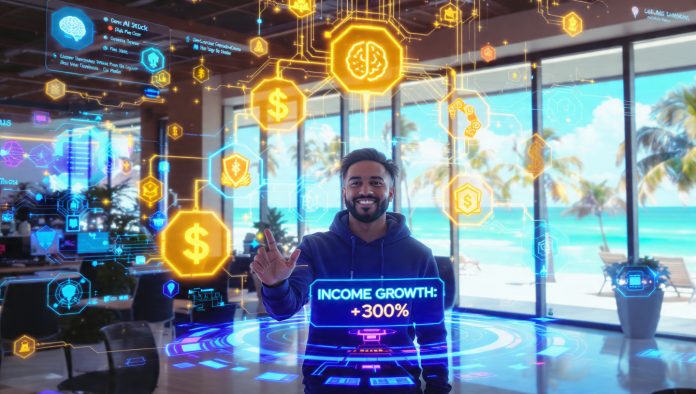

5 High-Income AI Skills You Need to Learn by Mid-2026

5 high income ai skills for 2026 career growth guide nusrat khan

By February 2026, the phrase “AI will replace jobs” has been proven partially true. However, the full truth is more nuanced: AI is replacing tasks, but it is creating entirely new high-income skill brackets. The days of simply writing a “prompt” and getting a result are over. In the current economy, companies aren’t looking for prompt engineers; they are looking for AI Architects and Orchestrators.

If you want to stay in the top 1% of earners by mid-2026, you need to pivot from being a user of AI to a builder of AI systems. Here are the five high-income skills that are currently commanding $200k+ salaries in the remote market.


1. AI Agent Orchestration (Multi-Agent Systems)

In 2024, we used one AI at a time. In 2026, we use teams of AIs. This skill involves designing a “Multi-Agent System” where different AI agents (like a Researcher, a Writer, and a Coder) talk to each other to complete a complex project.

As Inaayat explored in her recent Private AI Agent Tutorial, the value isn’t in the AI itself, but in the Workflow Logic.

  • The Income Potential: Companies are paying massive retainers to experts who can replace entire departments with automated agentic workflows.
  • How to Master: Learn frameworks like CrewAI, AutoGen, or the technical logic behind Zero Code Workflow Automation using n8n.

2. Ethical AI Governance & Audit

With the European AI Act of 2025 and similar global regulations now in full force, businesses are terrified of “AI Hallucinations” leading to legal lawsuits. An AI Auditor ensures that a companyโ€™s AI is unbiased, safe, and compliant with privacy laws.

This skill links directly to the security protocols Sameer Shukla discussed in Biometric Security & Data Protection. You aren’t just a coder; you are a digital lawyer and security specialist combined.

  • The Income Potential: Freelance AI Auditors are charging $500/hour for compliance certificates.

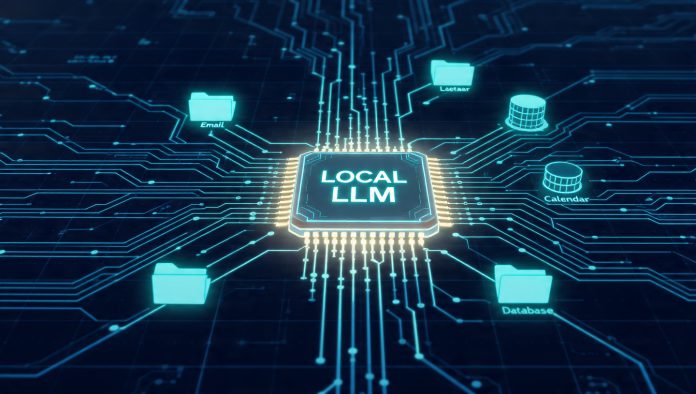
3. Local LLM Infrastructure Management

Data sovereignty is the biggest trend of 2026. Enterprises are moving away from OpenAI and Google Cloud to save costs and protect trade secrets. They need specialists who can deploy and maintain Local LLMs on private servers.

You need to understand the hardware requirements we covered in Computers and Technologies in a Studentโ€™s Life.

  • Key Tools: Ollama, Docker, and NVIDIA Enterprise AI stacks.
  • Why it pays: Itโ€™s a hybrid of Hardware Engineering and Software Developmentโ€”a rare and expensive combination.

4. Bio-Digital Interface Content Creation

With the release of advanced Spatial Computing headsets and early-stage neural interfaces in early 2026, “flat” content is dying. The new high-income skill is creating Contextual AI Contentโ€”content that changes based on the user’s biometric response or environment.

If you previously read our guide on Best Platforms to Learn Generative AI, you now need to upgrade those skills to include 3D asset generation and real-time AI rendering.


5. AI-Integrated Financial Engineering

As a FinTech lead, this is my specialty. The most profitable skill in 2026 is building automated bridges between AI agents and Borderless Banking Systems.

Imagine an AI that doesn’t just “suggest” a budget but actually executes currency trades, manages offshore tax compliance, and optimizes your business runway in real-time.

  • The Skill: Financial logic + API Integration.
  • The Result: Total financial autonomy for digital businesses.

How to Start Learning (The 2026 Roadmap)

You don’t need a 4-year degree. You need a Portfolio of Agents.

  1. Stop Prompting, Start Coding: Even basic Python is now mandatory.
  2. Master the “Stack”: Learn how to connect an LLM to a database (RAG).
  3. Specialization: Pick one pillarโ€”Security, Finance, or Creativeโ€”and become the “AI Guy” for that niche.

Refer to the FactsnFigs Resource Hub for a curated list of learning paths that bypass the fluff and focus on these high-income outcomes.


The Expertโ€™s Warning: The “Skill Half-Life”

In 2026, a skill’s half-life is roughly 6 months. If you aren’t learning every week, you are becoming obsolete. The good news? The tools are getting easier to use. The barrier to entry is no longer technical knowledge; it is Creative Problem Solving.

Nusratโ€™s Final Thought: “Wealth in 2026 is no longer about how hard you work, but about how many intelligent agents you manage while you sleep.”

Why 2FA is No Longer Enough: Moving to Biometric Security for Remote Work

Biometric security for remote work passkeys vs 2fa 2026 tutorial

For years, weโ€™ve been told that Two-Factor Authentication (2FA) is the “Gold Standard” of digital safety. But as we sit in February 2026, that advice has become dangerously outdated. The rise of Real-Time Phishing Proxies and AI-generated Session Hijacking has made traditional 2FA (SMS codes and even App-based TOTP) a low hurdle for sophisticated attackers.

If you are a remote professional or a digital nomad handling sensitive data, you need to understand why the “Second Factor” is failing and why Biometric Security and FIDO2 Protocols are the only way forward.


The Death of Traditional 2FA

To understand the solution, we must first look at how the 2FA we trusted for a decade has been compromised in 2026.

1. Adversary-in-the-Middle (AiTM) Attacks

Attackers now use automated proxy tools that mirror a real login page. When you enter your 2FA code, they capture it in real-time and use it to hijack your session cookie. This bypasses the need for your password or code ever again.

2. SMS Swapping & Social Engineering

SMS-based 2FA was already weak, but in 2026, AI-cloned voices can trick telecom operators into swapping SIM cards in minutes. As I highlighted in our IoT & Home Office Security Guide, any security that relies on a cellular network is inherently vulnerable to localized hardware attacks.


What is Biometric & Passwordless Security?

Biometric security in 2026 isn’t just “Face ID” on your phone. It is part of the FIDO2 (Fast Identity Online) standard, which replaces passwords with Passkeys.

A Passkey is a cryptographic entity that lives on your device. It uses “Public Key Cryptography” where the server only knows your public key, and only your physical biometric (fingerprint or iris scan) can “unlock” the private key to sign a login request.

Why Biometrics Win:

  • Phishing Resistance: Since there is no “code” to type, there is nothing for a phishing site to steal.
  • Device Binding: The login only works if your physical device is present.
  • User Experience: No more remembering 20-character passwords or rushing to check an SMS.

Technical Guide: Implementing a Passwordless Workflow

If you are serious about securing your remote setup, follow this 2026 protocol.

Step 1: Hardware-Bound Passkeys

Don’t just store passkeys in your browser. Use a dedicated hardware security key (like a YubiKey 6 Series or Google Titan 2026).

  • These keys require a physical touch + a PIN or Biometric.
  • Even if your laptop is stolen, the data cannot be extracted from these chips.

Step 2: Transitioning your “Digital Vault”

Move your passwords from basic browsers to encrypted vaults that support Passkeys.

  • Workflow: In your vault settings, select “Create a Passkey.”
  • Linkage: This is crucial for securing your Borderless Banking accounts, where a single compromised password could mean total financial loss.

Step 3: Biometric OS Integration

Enable Windows Hello for Business or Appleโ€™s Secure Enclave on your workstation.

  • Ensure your hardware meets the “TPM 3.0” standard (Trustworthy Platform Module).
  • As discussed in Inaayatโ€™s Private AI Agent Tutorial, if you are running local AI, you must gate your local API ports behind biometric authentication to prevent unauthorized local access.

The “Zero Trust” Architecture

Moving to biometrics is just one piece of the puzzle. For remote workers, the goal is Zero Trust.

  1. Identity Verification: Biometrics (Who are you?).
  2. Device Health Check: Is your OS updated? Is the firewall on?
  3. Contextual Awareness: Are you logging in from a known “Nomad Hub” or an unexpected location?

By combining these, you create a shield that traditional 2FA simply cannot provide. This is the logic we used when designing the security layers for the Zero Trust Security Guide earlier this year.


The 2026 Risk: Can Biometrics Be Faked?

A common concern in 2026 is Deepfakes. Can an AI-generated face bypass your biometric lock?

  • The Solution: Modern sensors use “Liveness Detection” (infrared depth sensing and 3D mapping).
  • Advice: Always use hardware that supports “Anti-Spoofing” protocols.

Conclusion: Secure Your 2026 Roadmap

The transition from “What you know” (passwords/codes) to “Who you are” (biometrics) and “What you have” (hardware keys) is no longer optional. It is the baseline for survival in the 2026 digital economy.

By implementing these steps, you are not just protecting an account; you are protecting your digital sovereignty.

Sameerโ€™s Final Thought: “In 2026, if your security depends on a 6-digit code sent to your phone, you’ve already lost the battle. Go biometric, or go home.”

How to Build Your Own Private AI Agent for Daily Tasks: The 2026 Guide to Local Intelligence

Private AI agent tutorial for daily task automation local LLM 2026

In 2026, the real divide in productivity isn’t between those who use AI and those who don’t it’s between those who rely on external cloud APIs and those who own their intelligence. A Private AI Agent is a self-hosted system that can reason, use tools, and execute workflows without your data ever leaving your local network.

This guide provides a deep-dive technical roadmap to building your first agentic system using local LLMs.


The Architecture of a Private Agent

To build an agent, you need three distinct layers working in sync:

  1. The Inference Engine: The software that runs the model (Ollama, LocalAI).
  2. The Brain (LLM): A model optimized for “Function Calling” (Llama 3.1 or Mistral).
  3. The Orchestrator: The logic that allows the AI to use your computer (CrewAI, PydanticAI, or n8n).

Phase 1: Environment Setup & Hardware Benchmarking

Before installing software, you must ensure your hardware can handle “Token Generation” speeds of at least 15-20 tokens per second for a smooth experience.

  • Memory Bandwidth: Local LLMs are limited by RAM speed. DDR5 is highly recommended.
  • Software Layer: Install Docker Desktop. Most private AI tools in 2026 run in containers to isolate them from your main OS for security.

Phase 2: Deploying the Local Engine (Ollama + Open WebUI)

We will use Ollama as our backend because of its lightweight manifest management.

  1. Install Ollama: Run the installer from ollama.com.
  2. Pull the Model: Open your terminal and run: ollama pull llama3.1:8b-instruct-q8_0 (Note: The q8_0 quantization ensures high reasoning accuracy while saving VRAM).
  3. GUI Setup: To interact with your agent, deploy Open WebUI via Docker: docker run -d -p 3000:8080 --add-host=host.docker.internal:host-gateway -v open-webui:/app/backend/data --name open-webui ghcr.io/open-webui/open-webui:main

Phase 3: Giving the Agent “Tools” (The Deep Work)

An LLM by itself is just a calculator for words. An Agent needs tools. We will use n8n (Self-hosted) as the central nervous system.

Workflow 1: The Email Triage Agent

  • Step A (Trigger): Connect n8n to your IMAP email server.
  • Step B (Context): Use the “Ollama Node” in n8n. Set the system prompt: “You are a private assistant. Analyze the incoming email. If it’s a meeting request, extract the date/time. If it’s a bill, extract the amount.”
  • Step C (Action): Connect a Google Calendar or Notion node to auto-fill the extracted data.

This setup mirrors the automation logic we explored in our Zero Code Workflow Automation guide, but now it’s powered by a local brain instead of a paid API.


Phase 4: RAG (Retrieval-Augmented Generation)

For your agent to answer questions about your private files, you need a Vector Database.

  1. In Open WebUI, use the Documents feature.
  2. Upload your business PDFs or the Computers and Technologies in a Studentโ€™s Life guide for testing.
  3. The system will “Embed” these files locally. Now, when you ask your agent “What are my hardware specs?”, it searches your local files first.

Security Protocols for Private AI

As Sameer Shukla warns in his IoT Security Guide for 2026, running a local server opens ports.

  • Disable External API Access: Ensure OLLAMA_HOST=127.0.0.1 is set in your environment variables so hackers can’t use your GPU remotely.
  • VLAN Isolation: If possible, run your AI server on a separate VLAN from your main work computer.

Technical Troubleshooting

  • Issue: “Model is too slow.”
    • Fix: Check if your layers are being offloaded to the CPU. Use ollama run llama3.1 --verbose to check GPU utilization.
  • Issue: “Agent hallucinating tools.”
    • Fix: Use a smaller context window (4096 tokens) to keep the agent focused on the immediate task.

Conclusion: Owning the Machine

Building a private AI agent is the ultimate step toward digital sovereignty. By linking this setup to your Borderless Banking infrastructure, you can eventually automate financial reporting and security audits without a middleman.

Inaayatโ€™s Final Thought: “Don’t let your data be the fuel for someone else’s trillion-dollar company. Build local, stay private, and automate everything.”

The 2026 Guide to Borderless Banking: Why We Are Moving Beyond Traditional Neobanks

Future of borderless banking 2026 digital nomad fintech interface

In the early 2020s, having a Wise or Revolut account was the ultimate flex for a digital nomad. Fast forward to February 2026, and the landscape has shifted beneath our feet. The “Neobank Revolution” has matured into something far more complex and necessary: The Borderless Banking Infrastructure.

If you are still relying on a single fintech app to manage your global wealth, you aren’t just behind the curveโ€”you are at risk. As a digital entrepreneur navigating the 2026 economy, your banking needs have evolved from “simple transfers” to “multi-jurisdictional asset protection.”

What is Borderless Banking in 2026?

Unlike the first-gen neobanks that were essentially “digital wrappers” for traditional banking licenses, true borderless banking in 2026 integrates decentralized finance (DeFi) security with institutional stability. Itโ€™s not just about spending money in 50 currencies; itโ€™s about where that money legally resides while you are crossing borders.

The Shift: Why Neobanks Aren’t Enough Anymore

  1. Compliance Fatigue: Regulatory bodies have tightened the screws on “Electronic Money Institutions” (EMIs). Weโ€™ve seen more account freezes in the last 12 months than in the previous decade.
  2. The Need for Yield: In an era of fluctuating inflation, leaving “dead cash” in a standard neobank is a losing strategy.
  3. The 2026 Security Gap: With AI-driven phishing on the rise, the basic 2FA offered by early fintech apps is no longer sufficient.

Core Pillars of a Borderless Banking Strategy

1. Multi-Jurisdictional Residency & Banking

For the modern entrepreneur, your bank and your residency no longer need to be in the same country. In our recent analysis of Digital Wallets for Small Business, we discussed how the architecture of your wallet determines your tax exposure. In 2026, borderless banking allows you to hold assets in “Neutral Zones” like Singapore, UAE, or digital-first jurisdictions like Estonia.

2. AI-Driven Wealth Management

One of the biggest breakthroughs this year has been the integration of autonomous agents in banking. As I noted in my previous guide on AI + FinTech: Wealth Automation, your banking app should now be smart enough to move your idle funds into high-yield liquidity pools or stable-coin vaults automatically, based on real-time global interest rates.


Top 3 Borderless Banking Platforms for 2026

A. The Institutional Fintech (Safety First)

If your business is scaling, you need a platform that offers more than just a virtual card. Look for providers that offer Asset Segregation. This ensures that even if the fintech company faces liquidity issues, your business capital remains untouched in a custodial Tier-1 bank.

B. The Crypto-Native Gateway

For those earning in USDC or ETH, a borderless bank must have a seamless bridge. The 2026 standard is “Instant Off-ramping,” where your crypto earnings are instantly converted to local fiat at the point of sale with zero spread. This is a game-changer for those following our Best Platforms to Learn Generative AI guide and earning through AI-freelancing.

C. The Hybrid Privacy Bank

Privacy is the new luxury. Emerging players are now using Zero-Knowledge Proofs (ZKP) to verify your identity to regulators without exposing your entire transaction history to the public. This aligns with the security protocols discussed by Sameer Shukla in his IoT & Home Office Security Guide.


How to Set Up Your Borderless Infrastructure

To truly achieve financial freedom as a nomad, you need a “Three-Tier System”:

  1. The Operational Layer: A high-speed neobank for daily expenses and subscriptions.
  2. The Capital Layer: A business account in a crypto-friendly jurisdiction (e.g., Wyoming or Switzerland).
  3. The Safety Vault: A cold-storage or institutional-grade private bank where you keep 6+ months of runway.

Expert Tip: Check out the OECDโ€™s 2026 Common Reporting Standard (CRS) updates to understand how your borderless accounts are reported to your home country.


Addressing the YMYL Factor: Is it Safe?

Many ask if moving away from traditional banks is risky. In 2026, the risk is actually concentration. By spreading your wealth across borderless platforms, you mitigate “Single Point of Failure” risks. However, always ensure your chosen platform is regulated by a recognized authority like the Financial Conduct Authority (FCA) or equivalent.

Conclusion: The Future is Sovereign

Borderless banking is no longer a luxury for the ultra-wealthy. It is a utility for the digital nomad. As we continue to build out the FactsnFigs Resource Hub, our goal is to ensure you have the tools to stay liquid, secure, and tax-efficient in this borderless era.

Don’t wait for your local bank to “allow” you to be global. Build your own infrastructure today.

Nusrat Khan’s Verdict: โ€œ2026 will be remembered as the year ‘Geography’ finally died in the world of finance. Your bank is now where your laptop is

How to Manage Taxes as a Global Digital Nomad in 2026 Guide

How to Manage Taxes as a Global Digital Nomad in 2026

In 2026, the dream of borderless work has met the reality of global tax transparency. As governments worldwide implement advanced AI-driven tracking and the Common Reporting Standard (CRS) becomes near-instantaneous, the era of “tax-free improvisation” is over. For the modern professional, a robust Digital Nomad Infrastructure must include a proactive tax strategy.

This guide is a featured resource in our Resource Hub, where we curate the best tools for the 2026 Digital Economy.

Knowing How to Manage Taxes as a Global Digital Nomad in 2026 is no longer just about compliance; itโ€™s about protecting your wealth and ensuring your Future-Tech Utility isn’t drained by double taxation. This is Where Data Meets Decision.

The 2026 Tax Reality: Substance Over Presence

For years, nomads relied on the “183-day rule” as a shield. While the rule still exists in many jurisdictions like Spain, Portugal, and Malaysia, tax authorities in 2026 now look at “Substance.” They analyze where your family lives, where your Sunaofe ergonomic chair is shipped, and where your primary bank accounts are managed.

As Nusrat Khan, I have seen entrepreneurs lose thousands because they assumed a “Digital Nomad Visa” meant a “Tax Holiday.” In reality, most visas (like those in Hungary or Colombia) grant you residency but leave the tax liability to local laws.

Pillar 1: Navigating Residency and the 183-Day Threshold

Most countries claim taxing rights if you spend more than half a year within their borders. However, in 2026, many nomads are “Perpetual Travelers” who never stay anywhere for more than 90 days.

  • The Trap: If you don’t establish tax residency somewhere, your home country (especially the U.S., which uses citizenship-based taxation) may claim your entire worldwide income.
  • The Utility: Use tools like Abillio or TaxTrack to log your days automatically. This data is vital if you are audited while using 6G-connected remote tools.

Pillar 2: The Crypto Revolution & Tax Compliance

The biggest shift in 2026 is the mainstreaming of crypto-salaries. Whether you are getting paid in USDC or trading AI-driven assets, every transaction is a “taxable event.” This is where Cryptocurrency Tax Software for Entrepreneurs becomes a non-negotiable part of your kit.

Top Cryptocurrency Tax Software Picks for 2026:

  1. CoinLedger: Best for those who need “one-click” reports for multiple countries including the UK, US, and India.
  2. Koinly: The gold standard for global compliance, supporting over 30 countries and 800+ exchanges.
  3. ZenLedger: Specifically optimized for entrepreneurs who need to integrate their crypto data directly into TurboTax or Xero.
  • Real-World Utility: These platforms use AI to automatically classify “Staking Rewards” versus “Capital Gains,” saving you hundreds of hours of manual bookkeeping.

Pillar 3: US Nomads and the FEIE (Foreign Earned Income Exclusion)

If you are a U.S. citizen, 2026 brings an updated FEIE limit of approximately $130,000.

  • The Physical Presence Test: You must be outside the U.S. for 330 full days in a 12-month period.
  • The Self-Employment Catch: Even if the FEIE eliminates your income tax, you still owe the 15.3% Self-Employment Tax (Social Security and Medicare).
  • Decision Point: If you are earning significantly more than the exclusion limit, it may be time to move your Digital Nomad Infrastructure to a corporate structure in a territory like the Cayman Islands or the UAE.

Bridging Future-Tech with Real-World Utility: The “Tax-Efficient” Office

A common mistake is forgetting that your gear is a deduction. In 2026, your Noise-Canceling Headphones and your Portable Power Stations are legitimate business expenses.

When you invest in high-quality gear like Sunaofe, keep the digital receipt. Under 2026 rules, “Home Office Deductions” are strictly audited to ensure the space is used exclusively for work. At FactsnFigs, we advocate for keeping a “Digital Paper Trail”โ€”scan everything to the cloud using Secure Zero-Trust protocols.

Checklist for the 2026 Tax Season:

  1. Select Your Software: Choose a Cryptocurrency Tax Software for Entrepreneurs that integrates with your bank.
  2. Verify Your Days: Cross-reference your flight data with your travel log.
  3. Check Treaty Status: Does your host country have a “Double Taxation Treaty” with your home country?
  4. Audit Your Security: Ensure your financial data is stored on Secure IoT devices.

Conclusion: Freedom Through Structure

Learning How to Manage Taxes as a Global Digital Nomad in 2026 is the final step in achieving true freedom. Without a plan, you are simply a traveler waiting for an expensive surprise. With a plan, you are a global entrepreneur building a legacy.

By Bridging Future-Tech with Real-World Utility, you turn tax compliance from a headache into a competitive advantage. Use the right software, respect the residency rules, and always keep your Digital Nomad Infrastructure lean and documented. At FactsnFigs, we provide the data so you can make the decision. Where Data Meets Decision.

Secure Your IoT Devices: A Guide for Home Offices in 2026

Securing IoT Devices for Home Offices in 2026

In 2026, the “Home Office” is no longer just a laptop and a chair; it is a complex ecosystem of connected devices. From smart lighting that adjusts to your circadian rhythm to AI-powered voice assistants, your workspace is more “intelligent” than ever. However, this intelligence comes with a price: Vulnerability. At FactsnFigs, our mission of Bridging Future-Tech with Real-World Utility requires us to address the “invisible” threats lurking in your network.

Securing your Digital Nomad Infrastructure starts with the realization that every “Smart” device is a potential doorway for an attacker. This is Where Data Meets Decision.

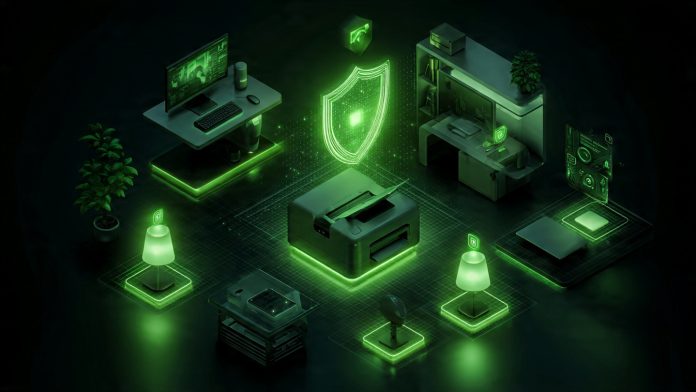
The 2026 IoT Landscape: Why Your Printer is a Target

By 2026, the number of IoT devices globally has crossed 30 billion. Most of these devicesโ€”like smart thermostats or coffee machinesโ€”are built for convenience, not security. They often lack the processing power for heavy encryption, making them the “weakest link” in your professional setup.

According to the 2026 Global Digital Trust Insights, 41% of security leaders cite a lack of network segmentation as their top challenge. When you work from home, your AI Project Management Tools and sensitive FinTech data live on the same Wi-Fi as your smart fridge. If the fridge is compromised, the hacker can move “laterally” to your laptop. This is why Securing IoT Devices for Home Offices in 2026 is a strategic necessity.

The Sameer Shukla Protocol: 5 Steps to a Fortified Office

To achieve Future-Tech Utility without sacrificing safety, I recommend a proactive, “Assume Breach” mindset.

1. Implement Micro-Segmentation

Don’t put all your eggs in one basket. Use your routerโ€™s settings to create a separate VLAN (Virtual Local Area Network) specifically for IoT devices.

  • Real-World Utility: Your work laptop and eSIM-connected devices should be on one network, while your smart TV and lights are on another. If the TV is hacked, the attacker is “trapped” in that segment.

2. Zero-Trust Architecture (ZTA)

Adopt the principle of “Never Trust, Always Verify.” In 2026, ZTA is the gold standard. Every device must prove its identity before communicating.

3. Kill the Defaults

It sounds simple, but 60% of IoT breaches in 2025 were due to default passwords.

  • Sameerโ€™s Tip: The moment you unbox a new device, change the admin credentials. Use a dedicated password manager to keep these complex, unique keys safe.

4. Firmware Vigilance (The “Patch or Perish” Rule)

IoT manufacturers often release security patches to close “Zero-Day” vulnerabilities.

  • Future-Tech Utility: Enable “Auto-Update” on every device. If a device hasn’t received an update in over 12 months, it is a liability. Consider replacing it with a future-proof alternative.

5. Disable UPnP and WPS

Universal Plug and Play (UPnP) and Wi-Fi Protected Setup (WPS) are designed for ease of use but are notoriously easy to exploit. Turn them off in your router settings to prevent unauthorized external access.

Bridging Future-Tech with Real-World Utility: The Hardware Check

As Digital Saiff mentioned in his guide on Ergonomic Setups, your gear must serve you. In 2026, this includes your router. If you are still using the router provided by your ISP, you are likely missing out on advanced AI-driven threat detection.

Investing in a Cyber-Hardened Router is a key part of your Digital Nomad Infrastructure. Look for features like:

  • On-Device AI Analytics: To detect anomalous behavior in real-time.
  • Hardware-Level Encryption: To secure data before it even hits the 6G network.

The “Human Factor”: Behavioral Security

Even the best Digital Nomad Infrastructure can be bypassed by a human error. As you learn Generative AI, be wary of “AI-enhanced” phishing attempts that might ask for your IoT control credentials.

At FactsnFigs, we believe that Where Data Meets Decision, the human must be the final firewall. Regularly audit your connected devices. If you no longer use that “Smart Coffee Maker” from three years ago, unplug it. An inactive device is an unmonitored back door.

Conclusion: Security as a Foundation for Growth

Securing IoT Devices for Home Offices in 2026 is not about living in fear; itโ€™s about building a foundation for growth. When your network is secure, you can focus your energy on the Rise of Solopreneurship and scaling your business.

By Bridging Future-Tech with Real-World Utility, we empower you to use the best tools available without becoming a statistic in a data breach report. Protect your data, protect your hardware, and always make the informed decision. Because here, Where Data Meets Decision, your safety is our priority.

Ergonomic Home Office Setup: Must-Have Gear for 2026 Guide

Ergonomic Home Office Setup: Must-Have Gear for 2026

In the fast-paced digital economy of 2026, your most valuable asset isn’t just your AI-Native Skill Stack; it is your physical health. As the lines between home and office continue to blur, the concept of a “desk and chair” has evolved into a sophisticated Digital Nomad Infrastructure. At FactsnFigs, we believe that high-level decision-making requires a body that isn’t distracted by pain.

An Ergonomic Home Office Setup: Must-Have Gear for 2026 is no longer a luxuryโ€”it is a performance requirement. Whether you are managing AI Project Management Tools or orchestrating FinTech automation, your environment dictates your output. This is Where Data Meets Decision.

The Shift: Ergonomics as a Utility, Not an Aesthetic

By 2026, we have moved past the “minimalist-only” trend. Todayโ€™s setups are defined by Future-Tech Utility. This means furniture that adapts to your biology. Static chairs are being replaced by “Active Seating” that encourages micro-movements, preventing the stagnant posture that leads to burnout.

When searching for Ergonomic Chairs Near You, Sunaofe has emerged as a front-runner for professionals who demand “Real-World Utility.” Why? Because they bridge the gap between high-end industrial engineering and home-office comfort.

The “Big Three” Pillars of Your 2026 Setup

To build a world-class Digital Nomad Infrastructure, you must focus on three core components that work in synergy.

1. The Command Center: Sunaofe Ergonomic Chairs

The chair is the heart of your workspace. In 2026, the Sunaofe Resistance Collection and Morph Series have set a new standard.

  • Dynamic Lumbar Support: Unlike older models with fixed cushions, Sunaofe chairs use auto-tracking tech that follows your spine as you recline or lean forward.
  • Real-World Utility: The 4D armrests allow you to adjust height and angle, ensuring your wrists stay neutral while using AI-driven keyboards.
  • Local Availability: If you are looking for ergonomic chairs near you, Sunaofe offers the perfect balance of premium features without the $1,500 “designer brand” price tag.

2. The Movement Engine: Dual-Motor Standing Desks

Sitting is the new smoking, but standing all day is also exhausting. The 2026 standard is the “Sit-Stand-Shift” routine. A dual-motor desk allows for smooth, silent transitions.

  • Utility Tip: Program your desk to raise during AI collaboration calls to keep your energy high, and lower it for deep-focus coding or writing.

3. The Sensory Shield: Acoustic and Visual Optimization

Your Digital Nomad Infrastructure must protect your focus.

  • Audio: Using Noise-Canceling Headphones is vital, but in 2026, we also see the rise of acoustic desk dividers that absorb ambient home noise.
  • Visual: Monitor arms are essential to keep your screen at a height that prevents “Tech Neck,” a common issue when analyzing 6G network data.

Bridging Future-Tech with Real-World Utility: The Bio-Data Connection

At FactsnFigs, we don’t just recommend gear because it looks good; we recommend it because it is Where Data Meets Decision. Modern ergonomic gear often comes with integrated sensors that track your “Sedentary Time.”

Imagine your chair nudging you to stand up after an hour of learning Generative AI. This is the intersection of health and technology. By investing in Sunaofe, you are buying into a system designed for longevity.

Why “Near You” Matters: The Logistics of Comfort

When you search for Ergonomic Chairs Near You, Sunaofe stands out because of its localized shipping and support network. In the 2026 economy, waiting 4 weeks for a chair is a loss of productivity. Quick-install designsโ€”often taking less than 15 minutes to assembleโ€”ensure that your Digital Nomad Infrastructure is up and running without delay.

Furthermore, having local access to service ensures that your Zero Trust Security and Cloud Data management isn’t interrupted by equipment failure.

Building Your Gear List: The Must-Haves

Gear Item2026 Feature to Look ForRecommendation
Ergonomic ChairAuto-track Lumbar & 4D ArmsSunaofe Morph Series
DeskDual-Motor Sit-Stand with MemorySunaofe All-in-One
LightingCircadian Rhythm Smart LEDsBenQ ScreenBar Halo
KeyboardSplit-Ortholinear LayoutMoonlander Mark I
PowerIntegrated Cable ManagementPortable Power Station

Conclusion: Investing in Your Infrastructure

Your Ergonomic Home Office Setup: Must-Have Gear for 2026 is the foundation of your career. Without it, the most advanced AI tools are useless because you won’t have the physical stamina to use them. By Bridging Future-Tech with Real-World Utility, you are telling yourself that your work matters.

Choose gear that supports your body, so your mind can focus on Where Data Meets Decision. Whether it’s the precision of a Sunaofe chair or the speed of your eSIM connection, every piece of your setup counts.

Best Platforms to Learn Generative AI for Free (2026 Guide)

Best Platforms to Learn Generative AI for Free

By 2026, Generative AI has moved from being a “cool tool” to being the primary engine of global digital output. However, as the volume of AI-generated data explodes, a new challenge has emerged: AI Content Generation Quality vs. Quantity. For the modern professional building a Digital Nomad Infrastructure, the ability to command these tools is no longer optional it is the baseline for survival.

At FactsnFigs, we believe that education should not be gated by high costs. Finding the Best Platforms to Learn Generative AI for Free is about more than just saving money; it is about acquiring the Future-Tech Utility needed to stay relevant in a landscape where “average” is no longer enough. This is Where Data Meets Decision.

The Quality vs. Quantity Dilemma in 2026

The internet is currently being flooded with low-effort, AI-generated “slop.” This is the “Quantity Trap.” Many creators believe that by producing more, they can win the SEO war. However, Googleโ€™s 2026 algorithms have shifted heavily toward “Information Gain” and “E-E-A-T” (Experience, Expertise, Authoritativeness, and Trustworthiness).

Mastering the AI Content Generation Quality vs. Quantity balance means using AI to handle the bulk work (Quantity) while you, the human architect, provide the nuance, personal experience, and strategic direction (Quality). To do this, you need a world-class education.

Top 5 Platforms to Learn Generative AI for Free (2026)

Based on Nusrat Khanโ€™s rigorous review of curriculum depth and real-world utility, here are the top platforms to master GenAI today.

1. Google Cloud Skills Boost (The Infrastructure Standard)

Google remains a powerhouse in AI training. Their “Generative AI Learning Path” has been updated for 2026 to include advanced modules on Gemini 2.0 and Vertex AI.

2. DeepLearning.AI (The Academic Edge)

Founded by Andrew Ng, this platform offers short, high-impact “Deep-Dive” courses. In 2026, their focus has shifted toward “AI Agents” and “AI Orchestration.”

3. Microsoft Learn: AI for Beginners (The Business Logic)

Microsoftโ€™s curriculum is tailored for the corporate and entrepreneurial world. It focuses on how Generative AI integrates into the tools you already use, like Copilot and Azure.

  • Real-World Utility: Essential for building a professional Digital Nomad Infrastructure within a Windows/Office ecosystem.
  • Link: Microsoft Learn AI Path

4. IBM SkillsBuild (The Enterprise Specialist)

IBM offers a very practical approach to AI ethics and data securityโ€”two things often ignored in the rush for “Quantity.”

5. Hugging Face Open Source Campus (The Technical Vanguard)

If you want to build your own models or customize existing ones, Hugging Face is the place. It is the heart of the open-source AI community.

  • Real-World Utility: Provides the skills to create custom Future-Tech Utility specific to your niche.
  • Link: Hugging Face Course

Bridging Future-Tech with Real-World Utility: The Human Element

Learning the tools is only half the battle. At FactsnFigs, we argue that the most important skill you will learn on these platforms is “Critique.” As you produce content, you must decide: Where Data Meets Decision. An AI might generate 10 variations of an article in seconds (Quantity), but it is your Future-Proof Digital Skill that chooses the one that actually provides value to the reader (Quality). This is why we recommend setting up a dedicated learning environment. Using Noise-Canceling Headphones and an Ergonomic Chair ensures you can focus on these complex technical modules without distraction.

Security and Ethics in AI Education

As you explore these platforms, you must remain vigilant about data privacy. In our guide to Cloud Security vs Edge Computing, we highlight that learning how to manage AI data safely is as important as learning how to generate it. Most free platforms now include a “Responsible AI” moduleโ€”do not skip it. It is a vital part of your Digital Nomad Infrastructure.

Practical Application: The 2026 Workflow

Once you have mastered the basics on these platforms, your daily workflow should look like this:

  1. AI for Volume: Use AI to draft outlines, research 6G trends, and organize FinTech data.
  2. Human for Value: Add personal anecdotes, check for Security Zero-Trust protocols, and ensure the final piece solves a real problem.
  3. Utility Check: Ask yourself, “Does this piece help my reader make a decision?” If yes, you have successfully bridged the gap.

Conclusion: Mastering the AI Frontier

The Best Platforms to Learn Generative AI for Free provide the bricks, but you are the architect. In 2026, the winner is not the one who uses AI the most, but the one who uses it the best. By focusing on the AI Content Generation Quality vs. Quantity balance, you protect your professional reputation and your brandโ€™s value.

At FactsnFigs, our commitment is to keep you informed so you can make high-level choices. Bridging Future-Tech with Real-World Utility isn’t just a tagline; itโ€™s the only way to thrive in the automation age. Stay educated, stay secure, and always remember: Where Data Meets Decision.

Zero-Trust Security 2026: How to Protect Remote Data Effectively

Zero Trust Security for Remote Data 2026

The traditional “castle-and-moat” security modelโ€”where everyone inside the network is trusted and everyone outside is a threatโ€”died years ago. In 2026, the perimeter has completely dissolved. Whether you are accessing company files from a high-speed train or a remote beach house, your Digital Nomad Infrastructure is under constant, automated attack. At FactsnFigs, we believe that security is the silent engine of freedom. This is why Zero Trust Security for Remote Data 2026 is no longer a luxury; it is a foundational requirement.

In a world where AI Agents perform your tasks and 6G Connectivity moves data at terabit speeds, the stakes for a breach have never been higher. This is Where Data Meets Decision.

What is Zero Trust Security in 2026?

Zero Trust is not a single product; it is a mindset shift. It operates on the core principle: “Never Trust, Always Verify.” In 2026, this has evolved into “Identity-First Security.” Every access request, whether it comes from your CEO’s laptop or an automated FinTech Wealth Bot, is treated as a potential threat until proven otherwise.

According to the latest NIST Cybersecurity Framework updates, Zero Trust is the only viable defense against the AI-driven phishing and deepfake attacks that have become common in 2026. By implementing this as part of your Future-Tech Utility, you ensure that even if one device is compromised, your entire “Kingdom” remains safe.

The Three Pillars of Zero Trust for Digital Nomads

To build a resilient Digital Nomad Infrastructure, you must implement these three technical pillars:

1. Continuous Identity Verification

Gone are the days of the simple password. In 2026, we use “Adaptive Authentication.” This means your system looks at your face (Biometrics), your location (via eSIM Metadata), and even the rhythm of your typing to verify it is really you. If you suddenly try to access a secure database from a new country at 3 AM, the system will automatically trigger a higher level of verification.

2. Micro-segmentation

Imagine your data as a hotel. In the old model, a key to the front door got you into every room. With Micro-segmentation, every room has its own lock. If a hacker gets into your “Travel Photos” folder, they still cannot access your AI Accounting Software. This containment strategy is essential for Real-World Utility.

3. Principle of Least Privilege (PoLP)

This is a simple but powerful rule: give your AI Workflow Automations only the exact permissions they need to do their jobโ€”nothing more. If an agent only needs to read emails, don’t give it permission to delete them.

Securing the “Physical” Layer of Your Infrastructure

While Zero Trust is a software framework, it relies on hardware integrity. If your device is powered down because of a bad battery, your security protocols can’t run. This is why high-end Portable Power Stations are actually a security investmentโ€”they keep your “Defense Perimeter” active.

Furthermore, physical privacy is the first line of defense. Using Noise-Canceling Headphones isn’t just about focus; it’s about ensuring your confidential client calls aren’t overheard in a cafรฉ. When you combine physical privacy with digital Zero Trust, you create a truly professional Digital Nomad Infrastructure.

Step-by-Step: Implementing Zero Trust as a Solopreneur

You don’t need an IT department to stay secure. Follow this 2026 checklist:

  1. Switch to Passwordless: Use FIDO2 security keys or passkeys.
  2. Encrypt Everything: Use FileVault (Mac) or BitLocker (Windows). If you’re a designer, ensure your Sunaofe Ergonomic Setup includes a privacy screen.
  3. Audit Your AI: Regularly check what permissions you’ve given to your AI Assistants.
  4. Secure Your Connection: Never log into a financial app on public Wi-Fi without a dedicated VPN or your own Portable Hotspot.

The Future-Tech Utility: AI vs. AI Security

In 2026, the “War for Data” is fought between AI models. Bad actors use AI to find vulnerabilities, but we use AI-Driven Threat Detection to stop them. Modern Zero Trust systems use machine learning to “learn” your normal behavior. If you suddenly start downloading 5,000 files, the AI recognizes this “Anomaly” and locks the account in milliseconds.

This is the ultimate expression of Where Data Meets Decision. The data (your behavior) allows the system to make a decision (lock or unlock) instantly. This protects your Future-Proof Digital Skills from being stolen or compromised.

Economic Impact: Security as a Business Asset

Clients in 2026 are terrified of data leaks. If you can prove that your Digital Nomad Infrastructure follows Zero Trust principles, you can charge a premium. You aren’t just a freelancer; you are a “Secure Partner.” High-authority bodies like the Cybersecurity & Infrastructure Security Agency (CISA) have stated that Zero Trust is the global benchmark for trust in the digital age.

Conclusion: Bridging the Gap to a Safer Future

Zero Trust Security for Remote Data 2026 is about more than just avoiding a hack. It is about building the confidence to work anywhere, with anyone, on any network. By Bridging Future-Tech with Real-World Utility, we allow you to focus on growth while the machines handle the defense.

Your career is a valuable asset. Protect it with the best architecture available. Because at FactsnFigs, we know that freedom is only possible when you are secure. This is Where Data Meets Decision.

FactsnFigs: Bridging Future-Tech with Real-World Utility โ€“ Where Data Meets Decision.