
23.1 C
New York
Thursday, October 1, 2026
Home Blog Page 140

How To Incorporate A Public Limited Company?

Public Limited Company (PLC)

A Public Limited Company (PLC) can be defined as a separate legal entity that carries its business by offering its shares to be traded on the stock exchange; making them available for the general public. As per the regulations of the corporate law, Public Limited Company Registration has to mandatory present its financial statistics and position to the public in order to maintain transparency.

Image result for A Public Limited Company?

Public Limited Companies differ on various aspects from private limited companies, however, they both exist for profit-making purposes and some of the distinct characteristics of a Public Limited Company are-

  • The ownership of a PLC lies with two or more shareholders, owning the shares of the company.
  • As per the Companies Act, 2013, a PLC in India has to keep a sum of rupees five lacs as the minimum paid-up capital.
  • The company’s existence is not dependent on the death, bankruptcy, or insolvency of any of the members.
  • A public company ought to have three or more than three directors for its existence.
  • A PLC needs to attain at least 90% amount of the shares issued by that company within a particular time period.
  • It has to use the term ‘ limited ’ at the end in order to limit the liability of the shareholders in case of some loss to their investments, so they cannot be charged on their private assets.
  • Indian PLCs need to follow the regulations set by the Companies Act, 2013.
  • It can be formed with the appointment of at least two directors and one qualified company secretary.
Incorporation of a Public Limited Company in India 

To be termed as a separate legal entity the PLC needs to be incorporated by a process defined in the Companies Act, 2013. There are certain eligibility criteria to be met before a PLC can apply for incorporation, such as –

  • Minimum Seven People who may act as both directors or shareholders.
  • One Resident Director, a person is said to be a ‘ resident ’ if he/she stays in India for a minimum of 182 days in the previous financial year; regardless of what their citizenship is.
  • Unique Name of the Company, an exclusive name for the PLC needs to get the trademark, and hence, it should not resemble any other existing company’s or LLP’s name.
  • No Minimum Capital needs to be maintained by the PLC for it to be incorporated.
Documents Required

The incorporation of Public Limited Company Registration Online is fairly lengthy and involves various documents to be provided regarding the directors’ identities and the registered office of a business. These documents are as follows-

  1. Identity Proof – The disclosure of the identities of various directors and shareholders includes personal id proof like voter id, driving license, Aadhaar card, or passport. PAN card for Indians and Passports for foreign nationals; along with proof of their nationality, two passport-sized pictures, and a Resolution of the board of company / LLP for authorization of directors or partners.
  2. Proof of Address– Address proof of all the directors and shareholders in the form of electricity bill, mobile bill, telephone bill, or bank statement (any one of these and not older than two months).
  3. Proof of the Registered Office – It has to be provided in the form of utility bill of the purposed office like, rent receipts along with lease documents, conveyance, etc. or photocopy of gas bills, electricity bills, phone bills ( but not more than two months old ).

How plastic recycling is changing chemical suppliers

Recycling of plastic waste may become an important driving force for the profitability of chemical suppliers. Existing players now need to take the right action to seize the opportunity.

If the demand for plastics develops according to the current trajectory, the global amount of plastic waste will increase from 260 million tons per year in 2016 to 460 million tons per year by 2030, which will raise the already serious environmental problems to a new level. In the face of strong public protest against global plastic pollution, the chemical supplier industry has also begun to mobilize on this issue. Our recent article, “no time to waste,” shows how industry leaders have gone beyond the “discard as you go” approach, under which the plastics industry has grown up, and embraced the extended definition of product management, including plastic waste disposal. As we emphasized in that article, this is not only required by the society, but also becoming a condition for the industry to retain its business license. It may also represent an important and profitable new business opportunity.

The final insight is based on our comprehensive assessment of the sources of future global waste flows, how to recycle them, and what kind of economic returns this activity can provide – these studies fill a major gap in the public debate. In this paper, we outline a vision of the plastics industry that 50% of the world’s plastics will be reused or recycled by 2030 – four times the current number – and that vision has the potential to create substantial value. According to this idea, the recycling and recycling of plastics can bring up to US $60 billion profit growth for the petrochemical and plastics industries, accounting for nearly two-thirds of the possible profit growth in the same period. We also discussed the level of social support needed to achieve this result, including support from major plastic users and consumers such as regulators, consumer packaging product companies, etc.

Petrochemical and plastic companies expand the chemical industry, because plastic production accounts for more than one-third of the industry’s threats and opportunities activities provide an array of strategic issues that we outline and they need to assess and select.

Chemical suppliers establish a virtuous cycle of plastic recycling worldwide

Our research shows that only 12% of plastic waste is recycled or recycled. Although plastics have the potential of reuse and recycling, the vast majority of waste plastics are burned, landfilled or dumped, which means that these materials as a resource will disappear forever. Plastic production requires a lot of capital investment and a lot of carbon footprint. Recycling plastics not only reduces these investment needs, but also helps to reduce the total carbon emissions of industry.

Images of plastic waste around the world have aroused strong opposition from consumers, which has been translated into regulatory measures to ban or restrict the use of plastic in many regions, especially in the European Union. Marine plastic pollution has always been a powerful public opinion mobilization force, and our colleagues have proposed solutions to this problem. However, when considering the possibility of recycling plastic waste, marine plastic pollution is best understood as the tip of the obvious iceberg.

The chemical industry, as well as the major consumer industry, the waste industry, and even the wider society, lack a clear prospect that large quantities of discarded plastics can be recycled and reused.

There is also a lack of a comprehensive view of where most of the waste will come from and which recycling and recycling technologies offer the greatest potential.

We address this gap through a comprehensive global model of plastic waste generation, different methods of plastic recycling and related recycling technologies, as well as their economic benefits. Our reference case assumes that the oil price is $75 per barrel. We also explored the situation of low and high prices, and the corresponding smaller and larger potential profit pools, as well as different social recycling methods, because these factors have a significant impact on the feasibility of plastic recycling.

All About NIDHI Company Registration Online Procees

what is Nidhi Company

The term “Nidhi” means a treasure. It is regulated under section 406 of the Companies Act 2013 and Nidhi Rules 2014. Nidhi Company is referred to as one of the kinds of NBFC. But no RBI approval is required to incorporate a Nidhi company as it is the exempted category.

Its main objective is to lend and borrow money amongst its members and to cultivate the habit of savings amongst its members. Nidhi companies are mostly incorporated in the southern part of India. Nidhi Company is incorporated in a style of a public company as it must have a minimum of 7 subscribers and a minimum of 3 directors and its name end with the words “Nidhi Limited”.

The benefit of Nidhi Company Registration

There is no need to get any license from RBI for borrowing and lending of money. Since Nidhi Companies are governed by Nidhi Rules 2014 so they have the least intervention by RBI. There is lesser risk involved in the repayment of loans.

Nidhi Company Registration online Process and fee details

As we have discussed in the introduction part about the Nidhi company registration and its benefits, please note that the process is very simple but you will be requiring an expert for following the procedure.
 

1) Directors and Members: There should be 3 directors along with 7 members. An individual can be a director and a member as well. Both can be the same.

2) Digital Signatures: In the Nidhi company registration process the primary requirement is the Digital Signature of the directors as well as the subscribers even if the subscribers do not have DIN no.

3) Consent on Name: In the Nidhi company registration process, the initial step is to select and suggest 2 names to proceed with because MCA is all set to reject 1 name and will give approval to only one name. Along with that, the objects will be also sent for approval.

4) AOA & MOA: Now the second step of the Nidhi company registration process is that the Application gets submitted along with the Article of association and memorandum of association. After that, the Ministry will issue COI. 

5) PAN & TAN and opening of current account: Apply PAN and TAN after incorporation and you’ll receive the same within a week. After receiving the PAN & TAN, you need to submit MOA, AOA, PAN, and COI to the bank to open the current account of your company.

Now here a question arises whether the process of Nidhi company registration online or offline?

So we would like to clarify that the process of Nidhi company registration is completely online. It was done to make the process simpler and easier for the stakeholder and to implement the ease of doing business in India. To reduce the physical visit to the department the process for Nidhi company registration online was executed by the Ministry of Corporate Affairs so that new entrepreneurs or business owners were encouraged to get the company formation.

Restrictions on Nidhi Company

1) Nidhi company cannot do any chit fund activity, hire purchase, and lease financial activities. Nidhi Company cannot lend or borrow money from any person other than its members.

2) Minimum paid-up capital requirement is Rs 5,00,000

3) It’s not allowed for Nidhi Company to issue preference shares, debentures, or any debt instruments.

4) Only secured loans can be given i.e. insecurity of any gold, silver, or any other valuable jewel.

5) The period of repayment of the loan should not exceed one year.

Post Incorporation Requirements

1) Nidhi Company has to maintain a minimum of 200 members within a time period of one year from its date of incorporation.

2) The net owned funds must be 10 lakh rupees or more, where Net owned funds is equal to Share capital + Free reserve including premium (-) accumulated losses (-) intangible assets.

3) The ratio of net owned funds (NOF) to deposits shouldn’t exceed 1:20,

4) Savings account must be opened so that INC-20A fulfillment can be made.

5) After fulfilling all such conditions NDH-1 must be filed within 90 days from the end of the first financial year after incorporation. It is a return of statutory compliances.

6) Form NDH-3 must be filed within 30 days from the end of each half-year. It is a half-yearly return.

7) Form NDH-4 must be filed within one year from the date of incorporation or within six months from the commencement of Nidhi Rules 2019 in the case of existing companies. When the company is newly incorporated then must be filed within sixty days from the date of expiry of one year from the date of its incorporation.

In this form, Nidhi Company must make a declaration that it is complying with all the rules and regulations. In case Nidhi Company does not fulfill the requirements of this rule, it cannot file form SH-7 and PAS-3.

8) One form is required to be file for the extension of time that is Form NDH-2 and the time period is within thirty days from the end of the first financial year. This form is used when Nidhi Company fails to comply to maintain the members up to 200 and the ratio of net owned funds to deposits more than 1:20.

9) Normal annual filing forms are the same as other registered companies with the same time limit that is formed AOC-4 and forms MGT-7.

GST On Nidhi Company

Once Nidhi Company gets incorporated, we have to take the GST Registration on Nidhi Company. The process of GST on Nidhi companies is almost the same as we do for some other public company.

Overview of the Registration process of GST on Nidhi Companies is:

1) Make a login over the GST portal.

2) Generate TRN of Nidhi Company by submitting all specific details.

3) With the help of TRN, File the GST application over the portal.

4) Attached the necessary documents as required like Electricity bill, Rent agreement, Consent letter, Photographs of directors, etc.

5) Once the application got filled, it’s been submitted with the help of a digital signature, or can say DSC.

6) If the application has all the valid information related to Nidhi Company then Department will allot ARN Number.

7) Further, a new step is announced by the GST department, to verify from the Adhar card.

8) OTP comes on mobile number director if his Adhar is linked.

9) After submission, if the department satisfies all data then allot the GST Number.

Remember: Adhar must be linked with the mobile number which will be used for GST Registration.

Conclusion

Nowadays Nidhi companies are in trend in the financial market. There are several benefits of Nidhi company registration and it is safe finance providing company at a very cheap cost, to its members.

All you need to know about Employee Provident Fund (EPF)

Managed by the Employee Provident Fund Organisation of India (EPFO), the Employee Provident Fund (EPF) is an employee’s fund wherein the employee and the employer have to contribute an equal pre-decided amount of money which can later be leveraged by the employee.

Employee Provident Fund
Here’s a step by step guide for you to understand all about EPF
What is EPF?

In EPF Registration wherein the employee and the employer have to contribute an equal pre-decided amount of money which can later be leveraged by the employee. It is managed by the Employee Provident Fund Organisation of India (EPFO).

EPF applicability

Let’s understand the conditions around which EPF is applicable –

EPF applicability for employers
  1. Any company that has 20 or more employees in total is required by law to deduct EPF.
  2. Subject to certain conditions even organisations with less than 20 employees are applicable.
EPF applicability for employees
  1. Any salaried employee with a monthly income of less than 15,000 INR needs to compulsorily be a member of the EPF.
  2. An employee with a monthly income higher than INR 15,000 (the current prescribed limit) is eligible to become a member of the EPF if he/she gets approval from the Assistant PF Commissioner and employer.
  3. An employee can also choose to opt out of EPF if his/her salary is higher than INR 15,000 and if they have never made any contribution to EPF. This can be done by filling Form 11, which is a self-declaration form provided by the EPFO

Most of the services provided by the EPFO can be easily availed online through the EPFO member e-Sewa portal. These services include EPF passbook — viewing and downloading, withdrawing funds, PF account transfers etc.

You can easily avail these services by registering and logging in to the EPFO portal. Login portal for the employee and employer are the same.

Most of the services provided by the EPFO can be easily availed online through the EPFO member e-Sewa portal. These services include EPF passbook — viewing and downloading, withdrawing funds, PF account transfers etc.

You can easily avail these services by registering and logging in to the EPFO portal. UAN is mandatory for EPFO login. If you still haven’t generated nor activated UAN

  1. Visit https://unifiedportal-mem.epfindia.gov.in/memberinterface/
  2. Enter you UAN number, password and captcha code
  3. Click ‘Sign in’

Once you raise the claim request, you can easily track your request status through the membership portal. Follow these steps to check out your EPF Registration Online in India

How to check EPF claim status

  • Go to EPFO portal
  • Hover over ‘Our services’ and click on ‘For employee’s’ tab
  • Click on ‘Know your claim status’
  • In the next page enter your UAN
  • In the opened web page enter your state, select the EPF office from the drop-down menu, enter your establishment code and account number.
  • Click ‘Submit’
  • The claim status will be sent via SMS on your UAN registered mobile number.

Employees State Insurance Corporation (ESIC)

Employee State Insurance Corporation is an autonomous body created by the law under the Ministry of Labour and Employment, Government of India.

ESI Registration in India encompasses certain health related eventualities that the workers are generally exposed to; such as sickness, maternity, temporary or permanent disablement, Occupational disease or death due to employment injury, resulting in loss of wages or earning capacity-total or partial. Social security provision made in the Act to counterbalance or negate the resulting physical or financial distress in such contingencies, are thus, aimed at upholding human dignity in times of crises through protection from deprivation, destitution and social degradation while enabling the society the retention and continuity of a socially useful and productive manpower.

Benefits of ESI Registration

The section 46 of the Act envisages following six social security benefits :-

  • Medical Benefit : Full medical care is provided to an Insured person and his family members from the day he enters insurable employment. There is no ceiling on expenditure on the treatment of an Insured Person or his family member. Medical care is also provided to retired and permanently disabled insured persons and their spouses on payment of a token annual premium of Rs. 120
  • Sickness Benefit(SB) : Sickness Benefit in the form of cash compensation at the rate of 70 per cent of wages is payable to insured workers during the periods of certified sickness for a maximum of 91 days in a year. In order to qualify for sickness benefit the insured worker is required to contribute for 78 days in a contribution period of 6 months.
  • Maternity Benefit (MB) : Maternity Benefit for confinement/pregnancy is payable for Twenty Six (26) weeks, which is extendable by further one month on medical advice at the rate of full wage subject to contribution for 70 days in the preceding Two Contribution Periods.

    Disablement Benefit
  1. Temporary disablement benefit (TDB) : From day one of entering insurable employment & irrespective of having paid any contribution in case of employment injury. Temporary Disablement Benefit at the rate of 90% of wage is payable so long as disability continues.
  2. Permanent disablement benefit (PDB) : The benefit is paid at the rate of 90% of wage in the form of monthly payment depending upon the extent of loss of earning capacity as certified by a Medical Board.
  • Dependants Benefit(DB) : DB paid at the rate of 90% of wage in the form of monthly payment to the dependants of a deceased Insured person in cases where death occurs due to employment injury or occupational hazards.

    Other Benefits :
    Funeral Expenses : An amount of Rs. 15,000/- is payable to the dependents or to the person who performs last rites from day one of entering insurable employment.
    Confinement Expenses : An Insured Women or an I.P.in respect of his wife in case confinement occurs at a place where necessary medical facilities under ESI Registration available. In addition, the scheme also provides some other need based benefits to insured workers. Vocational Rehabilitation :To permanently disabled Insured Person for undergoing VR Training at VRS.
    Physical Rehabilitation : In case of physical disablement due to employment injury.
    Old Age Medical Care :For Insured Person retiring on attaining the age of superannuation or under VRS/ERS and person having to leave service due to permanent disability insured person & spouse on payment of Rs. 120/- per annum. Rajiv Gandhi Shramik Kalyan Yojana : This scheme of Unemployment allowance was introduced w.e.f. 01-04-2005. An Insured Person who become unemployed after being insured three or more years, due to closure of factory/establishment, retrenchment or permanent invalidity are entitled to :-
  • Unemployment Allowance equal to 50% of wage for a maximum period of upto Two Years.
  • Medical care for self and family from ESI Hospitals/Dispensaries during the period IP receives unemployment allowance.
  • Vocational Training provided for upgrading skills – Expenditure on fee/travelling allowance borne by ESIC.
    Atal Beemit Vyakti Kalyan Yojana : This scheme is a welfare measure for employees covered under Section 2(9) of ESI Act, 1948, in the form of cash compensation upto 90 days, once in a lifetime, to be claimed after three months in  one or more spells for being rendered unemployed, provided the employee should have completed two years of insurable employment and has contributed not less than seventy eight (78) days in each of the four consecutive contribution periods immediately preceding to the claim of the relief. The relief shall not exceed twenty five percent (25%) of the average earning per day.The Scheme was introduced w.e.f. 01-07-2018.  The scheme is implemented on pilot basis for a period of two years initially.

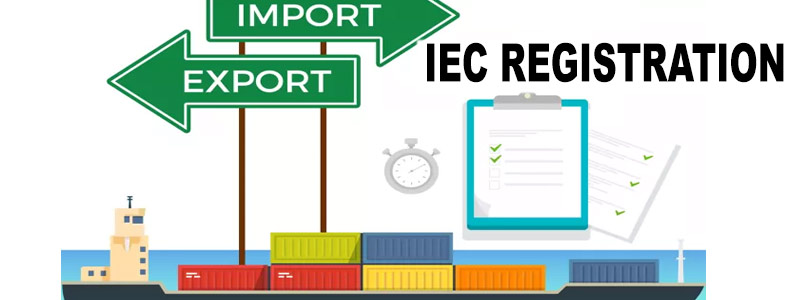
Online Import Export (IEC) Code Registration in India 2021

IEC is abbreviated as import export code registration and is unique 10 digit number issued by the director-general of foreign trade. Any businesses that want to deal with the import and exports in India should obtain this license. 

To obtain this import export license, a business has to abide by a few conditions and follow a certain process. As a business, you need to adhere to a few regulations for Import Export Code registration India.

Image result for Import Export (IEC) Code Registration
Import export code registration

IEC Code is an exclusive code provided to each bourgeois and businessperson. IEC code may be a ten Digit Code. IEC Code is should for each business that’s in import and export. that is Code stands for Import Export Code. it’s needed for someone mercantilism or commerce merchandise and services to or from India.

IEC is issued by the board General of Foreign Trade (DGFT), Ministry of Commerce and Industries, Government of India. Importers aren’t allowed to proceed while not this code and exporters can’t take good thing about exports from DGFT, Customs, Export Promotion Council if they don’t have this code.

Benefits of getting IEC code registration India

•    The unique IEC code you get with import export code registration India for the businesses will help it open the doors to venture into global markets.
•    Business with import-export code will also benefit from government schemes like Merchandise Export from India Scheme (MEIS) and Service Export from India Scheme (SEIS). 
•    Obtaining import export license is an easy process and can be obtained with simple documents. You will get the code within 7 – 10 days of applying through online IEC code registration India.
•    The license also serves as government identity proof for your business.
•    After you obtain IEC, there is no compliance in place to file any returns even if you conduct any import/export transaction. It is a maintenance-free document. 
•    Once you obtain an import export license, it is valid throughout its existence. Transactions related to import/ export can be conducted without any issues. 

Eligibility 

Any business, be it a partnership firm, sole proprietor and corporate who want to conduct international business should go for online IEC code registration India irrespective of the size of the business. However, if you are conducting import/export for personal use or agriculture or manufacture, IEC is not required because no trade is involved here.

When do you need ?

•    If your business entity is interested in conducting any import/export activities, you should obtain IEC.
•    When your business is looking for advantages and subsidies from DGFT, Customs, and the Export Promotion Council. 
•    If your business needs to clear shipments from the customs 
•    If the businesses are sending money outside the country, banks need you to submit IEC license to open an account for your business. 
•    If your business is an exporter that receives money from a foreign country as a part of the transaction. 

Process of Online import export code registration India

•    To obtain IEC Registration for the business, you need to fill the application in the specific format and file it with the regional DGFT office in your area.
•    You need to submit minimal and required documentation to showcase your identity, legality and address proof along with your bank details. With this regards, you may have accumulate documents like PAN of individual or business entity, identity proof like Adhar, voter ID or passport, business establishment address with proof( rental agreement/ electricity bill) and business registration details and cancelled cheque of the current account. 
•    After you are done filling the form and attaching the necessary documents, you need to file it with DGFT through digital signature certificate followed with the payment of the fee required to obtain online IEC code registration India.
•    After completion of processing your application, the government of India will issue IEC code in a soft copy.

Top 5 Things to Know About International Trademark Registration

  1. The Madrid Agreement of 1891 has 55 member countries and along with the Madrid Protocol makes up the ‘Madrid System’ for the International Trademark Registration. The Madrid Protocol of 1989 has 98 parties.The World Intellectual Property Office (WIPO) is the portal for the administration of policies regarding and processing of international applications.

The Madrid Protocol and Agreement are parallel systems – where a country is a signatory to both the protocol will take precedence.

2. There is no such thing as an “internationally effective” trademark.

While the Madrid System certainly provides convenient access to a large number of regions in which you can enjoy protection, there is no system that can provide you with a truly international trademark.

WIPO will formally examine your trademark application, however, each contracting party (country) in which you apply to register will have the opportunity to examine the application under their system. You may still end up dealing with a number of contracting offices in different countries.

3. Your international trademark is dependent on your domestic registration for the first 5 years
While a great deal of debate has taken place in recent years on this topic, currently, protection for your international trademark registration will be dependent on your domestic registration in the Office of Origin.

Should anything untoward occur with your home registration in the first 5 years of your international registration, it will be impacted too. If another company can find a valid reason to do so and apply to have your home registration cancelled within the dependency period, you could lose your international registrations too. This process is known as a ‘central attack’.

4. You can add more countries later
Once you hold an international registration, you may designate additional “contracting parties” in a subsequent designation. What is a subsequent designation?

It’s a request made by you the holder for an extension of protection of your original international registration. Such requests for amendments can be made directly to the World Intellectual Property Office through their Subsequent Designation system.

5. Registration and usage terms are generous.
An International Trademark Registration in India lasts for 10 years from the date of registration.
You are permitted up to 5 years before proof of use may be required where such use is not a requirement of registration in any contracting regions.
It may be renewed for additional 10-year periods for a renewal fee.

How to register Private Limited company in 4 easy steps

Establishment of Business is very crucial phase for any businessman as one has to comply with all legal requirements in addition to launch the business market. The entrepreneurs, willing to focus on launch and set-up business, search to start Private Limited Company Registration without any hassle concerning the legal procedure for incorporation of company.

Step 1: Procure Digital Signature Certificate:

The requirement of DSSCs arises for filling of e-forms on online portal of MCA as the Ministry has prescribed provided for online registration procedure for company incorporation and other applications. Digital Signature Certificate, commonly known as DSC are issued by the Certifying Authority in token form and is valid for 1 or 2 years.

The personnel involved in company formation in India are Subscribers and Directors for proposed company. The Subscriber is a person who is the promoter of the company and proposed shareholders. The said shareholders are required to file e-MOA and e-AOA by affixing DSCs whereas proposed directors shall obtain DIN by making an online application in next step.

List of Documents for Digital Signature Certificate:

  • Passport size photograph of applicant;
  • Self-attested Address proof of applicant; and
  • Self-attested PAN card of applicant.
Step 2: Obtain Director Identification Number

Director Identification Number (DIN) is a unique number assigned by Ministry of Corporate Affairs to the individual making an application for allotment of DIN. The number is allotted for lifetime by the Ministry unless it is surrendered or withdrawn.

obtaining DIN is mandatory to be appointed as Director in any Company. The Director Identification Number obtained can also be used for appointment for any other company and appointment as Designated Partner in the LLP.

What are the documents required for application of DIN?

  • Passport size photograph of applicant;
  • Self-attested Address proof of applicant; and
  • Self-attested PAN card of applicant.
Step 3: Reservation of Name

An Application for Reservation of Name of Private Limited Company Registration in India shall be made in e-Form INC – 1 by making payment of requisite fees. In one application you may provide maximum 6 names in preferential order along with the significance for application for proposed name(s). The appointed professional shall make a search for availability of name before filling the application so that the applicant can make application of the names accordingly. The Registrar enjoys 100% discretion for approval of name application.

The person shall make an application for name approval considering the provisions laid down by the Act. Further, following general practise are adhered to choose and apply the name:

  • The name should be easy to spell and remember;
  • The name shall be able to provide a distinct identity to the company;
  • It should be short & simple;
  • The name should not contain any word as opposed to public policy or prohibited;
  • It should not infringe any Trademark registered nor shall be similar or identical to any company/ LLP registered.

Indian Subsidiary Registration or Private Limited Company in India with Foreign Shareholder

India is a land of opportunities and skilled workforce as one would agree. Starting a business in India and Investing was never so easy, cheap and quick. Doing business in India is getting easier day by day due to E-governance and simpler procedures, Companies who intend to start business operations in India can start doing so by registering an Indian subsidiary of foreign companies or a Private Limited Company with Foreign Shareholder.

Private Limited Company in India as Indian Subsidiary

The company whose interests are held and controlled or held by another company. The preference share capital and the paid-up equity share capital of the Subsidiary company can be used to determine the holding company, subsidiary company relationship between two companies. The Indian Subsidiaries can be wholly owned by foreign nationals.

Private Limited Company in India with Foreign Shareholders

Private Limited Company in India with Foreign shareholders is a normal Private Limited Company with foreign shareholding. This type of company can already be existing Private Limited Company where foreign shareholders can invest their money or a newly incorporated company with a combination of Indian and foreign shareholders. The owners of the Private Limited Company depend upon the percentage of shareholding decided by the members of the company.

Advantages of Private Limited Company registration (As Indian subsidiary or with Foreign shareholder) in India

No Minimum Capital

No minimum capital is required to form a Private Limited Company. A Private Limited Company can be registered with a mere sum of Rs. 10,000 as total Authorized Share capital.

Separate Legal Entity

A Private Limited Company is a separate legal identity in the court of the law, meaning assets and liabilities of the business are not the same as the assets and liabilities of the directors. Both are counted as different. A private limited company separates Management and Ownership and thus, managers are responsible for the company’s success and are also answerable for the company’s loss.

Limited Liability

If the company undergoes financial distress because of whatsoever reasons, the personal assets of members will not be used to pay the debts of the Company as the liability of the person is limited.

For e.g. If a Private Limited company takes any loan and is unable to pay off, the members are responsible to pay only that much how much they own towards their own shareholding i.e. the unpaid share value. Which means, if you have no balance payable towards the amount of shares you hold, you are not payable towards any debt payable by the company even if the debt/credit amount remains unpaid.

Fund Raising

A Private Limited Company in India is the only form of business except Public Limited Companies that can raise funds from the Venture Capitalists or Angel investors.

Free & Easy transfer of shares

Shares of a company limited by shares are transferable by a shareholder t any other person. The transfer is easy as compared to the transfer of an interest in a business run as a proprietary concern or a partnership. Filing and signing a share transfer form and handing over the buyer of the shares along with share certificate can easily transfer shares.

Uninterrupted existence

A Private Limited company has ‘perpetual succession’, that is continued or uninterrupted existence until it is legally dissolved. A company, being a separate legal person, is unaffected by the death or other departure of any member but continues to be in existence irrespective of the changes in membership. Perpetual succession is one of the most important characteristics of a company.

FDI Allowed

In private Limited Company, 100% Foreign Direct Investment is allowed that means any foreign entity or foreign person can directly invest in a Private Limited Company.

Builds Credibility

The particulars of the company are available on a public database. Which improves the credibility of the company as it makes it easy to authenticate the details

Total shareholder return generated by the acquisition of chemical companies

The long-term trend makes M & A of chemical industry not only a means of growth, but also a means of security.

From 2014 to 2018, the chemical industry experienced a wave of M & A activities. This activity is in line with the M & a boom that occurs every decade in the industry. The demand for vertical integration (1980s), the low growth caused by the transfer of oil and gas capital from the chemical industry (1990s) and the growth of emerging markets (early 21st century) have stimulated the growth of M & A in the past decades.

The recent surge in M & A activity reflects the general trend in the industry. First of all, M & A is a response to the need to focus on pure business, so as to better serve those customers who expect to obtain more in-depth product expertise, and attract investors who pay more and more attention to pure business. In addition, M & A is the main contributor to the revenue growth of large companies. They use the complementary acquisition to enter new geographic markets, market segments, products and technology applications.

New and powerful competitors also make M & A a a sound defense strategy. As the growth of the liquid fuel market slows, oil and gas companies have turned their attention to the chemicals market – the biggest growth in oil demand from 2018 to 2035 will come from chemicals, not transportation and electricity. At the same time, state-owned enterprises in the Middle East and China have turned to the field of materials in order to enter the market and acquire technology and enhance their own capabilities.

M & A has always helped companies in the chemical industry create value. In fact, compared with general chemical companies, the total shareholder return (TSR) of large chemical companies pursuing large-scale M & A is more than 1.8%; those enterprises engaged in planned M & A create an additional 1.7% in TSR. In order to increase the possibility of creating high returns for shareholders, industry participants should build capacity at all stages of M & A. As the current trend of M & a boom will continue, chemical companies should establish unique capabilities at all stages of M & A, and continue to look for opportunities to better serve customers and grow.